Improving eCheck-In Experience for Spanish Speakers at Boston Children’s Hospital

Problem Overview
How might we decrease echeck-in drop-off among Spanish-speaking patients to reduce in-person check-in time and improve appointment attendance at Boston Children’s Hospital?
Business Objective
Reduce loss of reimbursement due to no-shows
User Research & Service Design for Healthcare
User interviews, user analytics, literature review, process mapping
Year
2025
Role
Project Manager & UX Researcher
Problem Statement
To reduce the time required at in-person check-in and increase likelihood of families attending their scheduled appointments, Boston Children’s Hospital offers an electronic check-in experience through their MyChart patient portal. Though the experience is offered in Spanish, completion rates are much lower for the Spanish experience than the one in English, particularly at the Document e-Signature and Questionnaire steps. This leads to patients losing time at their visit for in-person check-in, or not attending at all, resulting in reduced reimbursement for the hospital.
How might we reduce eCheck-in drop-off for Spanish-speaking users?
Understanding Our Client
Boston Children’s Hospital
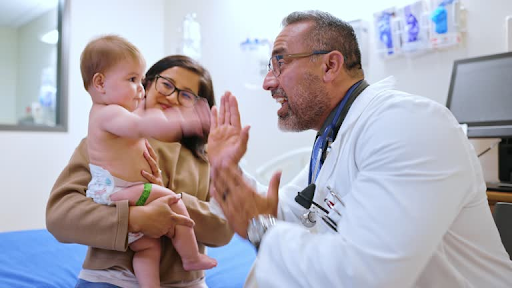
For this project, we worked with the User Experience Design team at Boston Children’s Hospital, who are working hard to provide the best healthcare experience to families and individuals seeking care. In our conversation, they shared some past insights they have uncovered and some limitations their team currently faces:
Past Insights
Users tend to drop-off after entering the MyChart app by Epic when they are asked to start the e-Signature process, which has them complete forms to speed up their check-in process when they arrive at the hospital
Users who are selecting “Prefer Spanish” usually cannot understand English, since many users with some English proficiency would just select English for the cleaner translation
Limitations
Limited customization due to investment in Epic health system and software
Out-sourced translation services for in-app experience
Access to users can be limited due to patient privacy and willingness to participate in research
Understanding Our Users
User Profile
To understand our users, we conducted user interviews and a literature review, and found that the users in this study are:
Parents of a sick or injured child OR young adult patients themselves
Concerned and worried
Fluent in Spanish but not English
Has a scheduled appointment
Wants to be seen as soon as possible upon arrival
Want to be treated with dignity
Does not want to make mistakes that may complicate their own or their child’s care or hospital experience
Wants to maintain family’s privacy
Process Flow
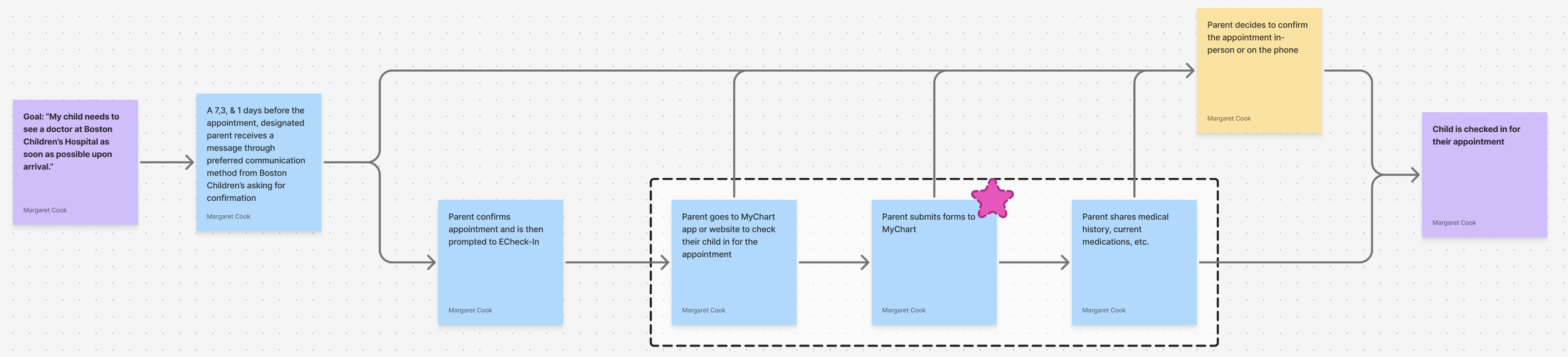
To better understand the eCheck-in process, we used our insights from interviews and literature review to inform a process flow diagram, which outlines the steps a user must take to successfully check-in for their appointment at Boston Children’s Hospital.
Research & Analysis
User Metrics
We reviewed user data to uncover insights that provide context on the scale of this problem, uncovering that:
~59%
Of patients who prefer Spanish were registered in MyChart in Oct 2025 (compared to 78% of English speaking users)
~48%
Of Spanish speaking users did not complete eCheck-in on MyChart in 2025
18.9%
Of Spanish speaking users drop off at the e-Signature stage
Summary of Key Findings
We leaned on user interviews and literature review to explore this problem space. From this exploration, we identified the following barriers & pain points:
Limited digital health literacy and awareness
Lack of confidence with digital health platforms
Disparity in access to translation resources
Varying levels of translation accuracy and efficacy
High levels of stress due to tense situation and fear of making a mistake
Process places a high cognitive load on the user
“Usually the translation is nonsense, and it’s even more confusing for us. Even though I’m not a native English speaker, the English is more straightforward and it says what it means to say.... And Latin America is very diverse, so someone doing the translation from one country might not be understood by someone from another country, but usually it’s that the automatic translation just doesn’t make sense.”
Possible Interventions
Communication
Ensure linguistically and culturally tailored translation
Problem: Navigation and understanding prompts difficult for Spanish speakers, increasing cognitive load and preventing online check-ins
CONTENT
Quick Win
Ensure end-to-end Spanish translation is correct (not partial translations)
OPERATIONAL
Coordinated Fix
Incorporate offering of Spanish speaking health facilitators to help with completion of online check-in
SYSTEMIC
Foundational Change
Work with Epic to create end-to-end experience for all non-English speakers
Metric(s) to Track: eCheck-in process completion prior to arrival
Respect
Increase digital literacy and user confidence
Problem: Users have a hard time adopting new technology, feeling insecure and uncomfortable completing tasks.
CONTENT
Quick Win
Provide a Spanish walk-through video (like this one in English) on BCH site and/or message with video and/or play it at check-in kiosks
Spanish video or visuals showing how to check in (with cc in Spanish or other languages)
Use culturally relevant examples and terminology
Reinforce benefits (saving time, avoiding delays)
OPERATIONAL
Coordinated Fix
Inform users via preferred communication method that they must arrive early to check-in and complete forms if they do not check-in prior to arrival
SYSTEMIC
Foundational Change
Offer “assisted digital check-in” in clinic or digital navigators that walk patients through check-in once
Metric(s) to Track: MyChart registration by preferred language & eCheck-in process completion prior to arrival
Conclusion
After presenting our solutions to the client, they were excited to review our interventions with their larger team and start exploring the art of the possible. They appreciate our understanding of their users’ struggles, as well as their teams limitations.
Looking Back: Room for Improvement
Larger Sample Size & Journey Maping
Due to time constraints and access to users, we were only able to conduct interviews with a very small sample size. It would have been valuable to conduct more user interviews to inform a detailed journey map, which could have given us more details on what barriers are preventing users from completing the echeck-in process.
Testing Interventions
Had our team had more time to complete this study, it would have been valuable to pilot some of our interventions or at least review them with users, so we could understand which would provide the most value the quickest.